
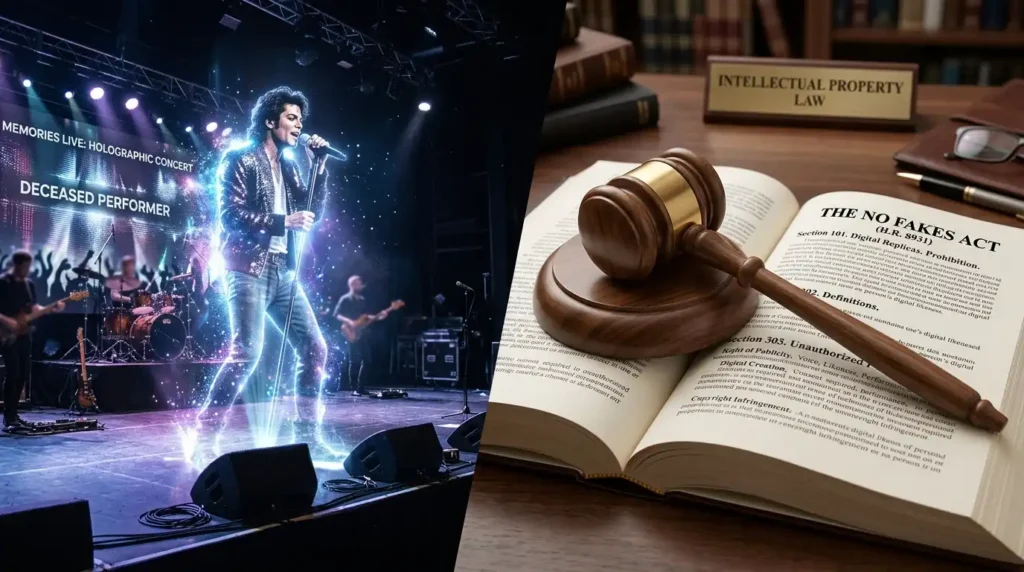
Defining the Legal “Digital Replica” Under Federal Law
At the core of the NO FAKES Act is a precise statutory definition designed to target unauthorized, computer-generated deepfakes while insulating general technology development. Under the proposed framework, a digital replica is defined as a newly created, computer-generated, highly realistic electronic representation that is readily identifiable as the voice or visual likeness of an actual individual.
It is crucial to distinguish a digital replica from conventional media editing techniques. The statutory definition specifically targets generative AI outputs that simulate an individual’s unique artistic performance or physical persona. It explicitly excludes traditional digital touch-ups, color corrections, routine audio remastering, or simple visual effects that do not attempt to substitute or synthesize an individual’s actual identity.
By defining this right as an explicit property right rather than a mere privacy tort, the legislation ensures that an individual’s voice and visual identity possess recognized commercial value that can be protected, licensed, and defended against unauthorized exploitation.
Post-Mortem Publicity Rights: Commercial Continuity Beyond Death
Historically, the “right of publicity”—the right to prevent the unauthorized commercial use of one’s name, image, or likeness—has suffered from extreme statutory fragmentation across state borders. Certain jurisdictions, like California and Tennessee (which passed the landmark ELVIS Act), offer strong statutory post-mortem publicity protections, while other states terminate publicity rights upon death or fail to recognize them altogether.
The NO FAKES Act addresses this fragmentation by establishing a national post-mortem protection model for digital replicas:
- Initial Post-Mortem Duration: Upon an individual’s passing, the exclusive right to control their digital replica transfers to their executors, designated heirs, or legitimate legal rights-holders for a baseline period of 10 years.
- Commercial Renewal Terms: If the rights-holder demonstrates active commercial use or licensing of the individual’s digital replica within the two years preceding the expiration of the 10-year term, the right can be extended in 5-year increments.
- Maximum Statutory Cap: These renewable 5-year extensions allow post-mortem rights to be protected for up to a total of 70 years following the individual’s death, mirroring standard copyright duration frameworks.
This structure ensures that estates and surviving families can protect deceased loved ones—and prominent icons—from non-consensual AI commercialization, unauthorized posthumous advertisements, or exploitative deepfakes while maintaining incentive for legitimate licensing.
Licensing Constraints and Lifetime Assignment Limits
To prevent coercive industry practices where young artists or vulnerable individuals might unknowingly sign away their digital rights in perpetuity, the NO FAKES Act incorporates strict statutory guardrails governing licensing agreements:
1. Non-Assignability During Life
The underlying right to an individual’s voice and visual likeness cannot be outright assigned or permanently sold during the individual’s lifetime. The individual remains the foundational owner of their core digital identity.
2. Short-Term Licensing Caps
While an individual can license the commercial use of their digital replica, any lifetime license granted to an external entity is capped at a maximum duration of 10 years. This forces media companies, studios, and advertisers to renegotiate terms periodically rather than holding perpetual rights to an artist’s synthetic persona.
3. Collective Bargaining Protections
Recognizing the complex labor negotiations within the entertainment sector, the bill provides specific exemptions for licensing arrangements negotiated through valid collective bargaining agreements (such as SAG-AFTRA or AFM contracts).
First Amendment Exemptions vs. Unlawful Exploitation
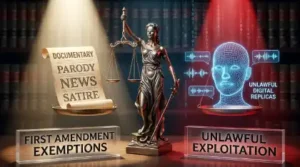 A primary legal debate surrounding the federalization of publicity rights involves safeguarding First Amendment expression. Critics and digital rights advocates have cautioned that overly broad digital replica rights could inadvertently suppress parody, historical commentary, or political satire.
To preserve free expression, the NO FAKES Act incorporates statutory exclusions modeled after traditional fair use principles. The creating or sharing of a digital replica is generally excluded from liability when used for:
- Bona fide news reporting, public affairs broadcasting, or sports accounts.
- Documentaries, biographical accounts, or historical representations, provided the depiction does not create a false impression that the performance was live or genuine.
- Satire, commentary, criticism, scholarship, or artistic parody.
- Non-commercial research activities conducted by non-profit libraries, historical archives, or educational institutions.
However, these First Amendment safe harbors explicitly do not apply to sexually explicit content or non-consensual synthetic pornography. Generating unauthorized, sexually explicit digital replicas triggers immediate civil liability under the framework.
Platform Liability, Notice-and-Takedown, and Damages
In a direct departure from the absolute liability immunity historically provided by Section 230 of the Communications Decency Act, the NO FAKES Act creates a structured liability regime for online service providers hosting AI-generated content.
Modeled after the Digital Millennium Copyright Act (DMCA), the bill establishes a federal notice-and-takedown mechanism:
- Designated Takedown Agents: Online platforms must designate an authorized agent registered with the U.S. Copyright Office to receive formal notifications of unauthorized digital replica infringements.
- Obligation to Disable Access: Upon receiving valid notice from a rights-holder, the platform must expeditiously remove or disable access to the infringing synthetic content to maintain safe harbor immunity.
- Counter-Notification Remedies: Users who believe their content was improperly removed can file a counter-notice. However, to deter abuse, knowingly filing false counter-notifications carries severe statutory penalties, including fines of up to $25,000 per violation.
For entities that knowingly distribute unauthorized replicas or offer services designed primarily to generate non-consensual clones, the act authorizes statutory damages starting at $5,000 per violation, as well as actual damages and injunctive relief.
Preparing Estate Plans for the Synthetic Era
The introduction of the NO FAKES Act signals a new era in estate planning and intellectual property management. Digital identity is no longer merely an intangible privacy concern—it is a tangible asset that requires explicit legal structuring.
Attorneys advising clients must begin incorporating specific “Digital Identity and Synthetic Replica” clauses into wills, trusts, and licensing agreements. By establishing who controls a person’s post-mortem digital voice and visual likeness, individuals can ensure their digital legacy remains protected, respected, and ethically managed for generations to come.
To bridge this statutory gap, federal lawmakers introduced the Nurture Originals, Foster Art, and Keep Entertainment Safe (NO FAKES) Act. Grounded in findings from the U.S. Copyright Office Report on AI and Digital Replicas, the legislative proposal seeks to unify the nation’s legal landscape regarding synthetic voice cloning and unauthorized deepfakes.
To preserve free expression, the act balances protections with strict First Amendment accommodations and right of publicity exemptions for news, satire, and biographical docudramas.